
Choosing the right fire doors for construction projects involves more than selecting a door design or comparing prices.Fire doors are part of a building’s fire protection strategy, and their suitability depends on the required fire rating, door construction, hardware, dimensions, and applicable project standards.
For contractors, developers, and building material buyers, understanding these basic factors can make sourcing more efficient and help avoid unnecessary changes during production.
Whether you are purchasing fire doors for a hotel, apartment building, commercial facility, or industrial project, the following considerations can help you make a more informed decision.
1. Understand What Makes a Complete Fire Door
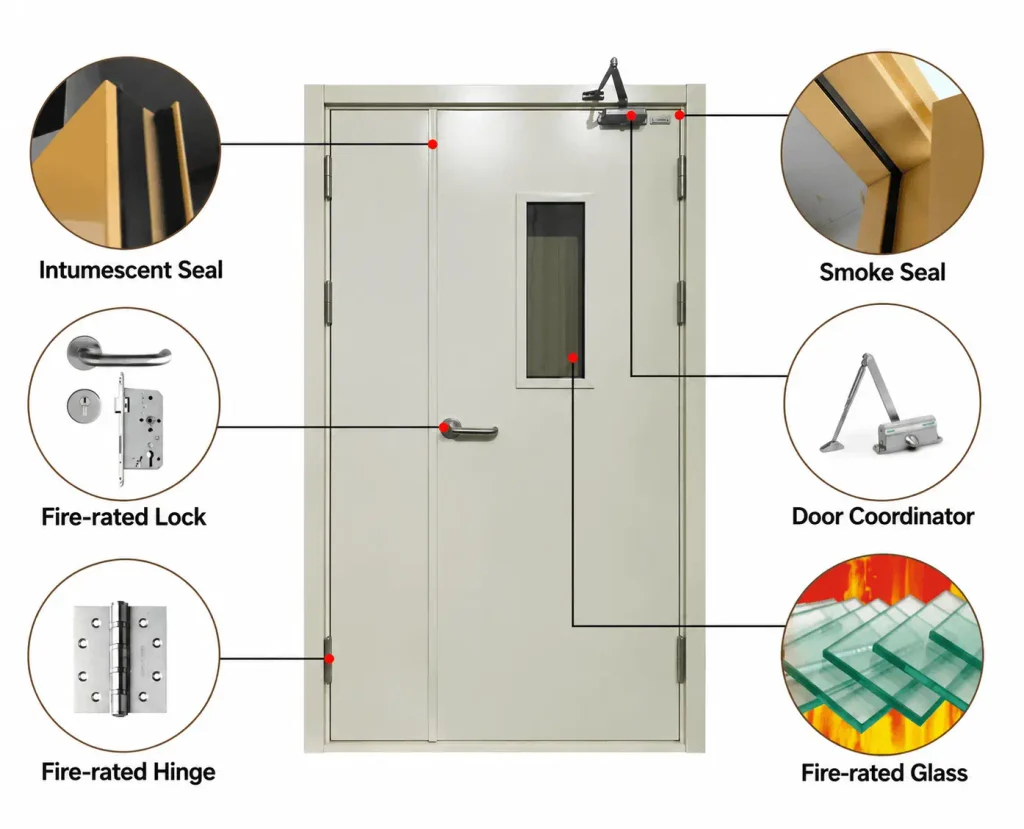
A fire door is not simply a metal door with a fire-resistant filling.
A typical fire door assembly includes several important components:
- Door leaf: The main door panel, constructed using materials and internal components appropriate for the required fire rating.
- Door frame: Designed to work with the door leaf as part of the complete assembly.
- Hinges and locking hardware: Selected according to the door design and applicable requirements.
- Door closer: Helps the door return to its closed position after use.
- Seals: Depending on the system, these may include intumescent seals, smoke seals, or other specified components.
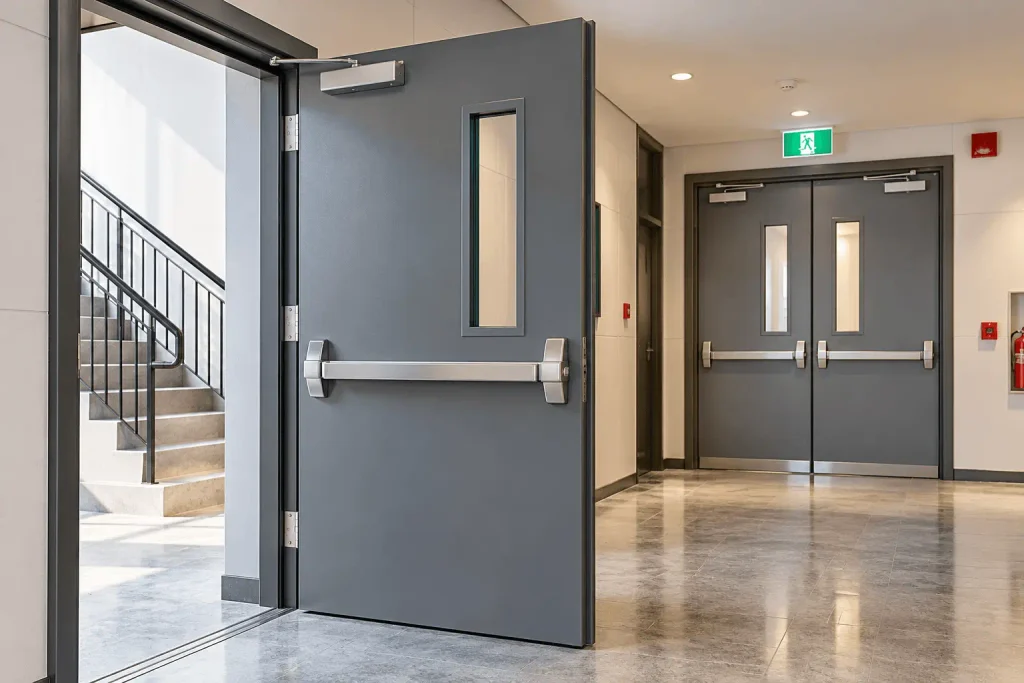
Some projects also require panic exit hardware, vision panels, or other accessories.
These details matter because the performance of a fire door depends on the assembly, not just the appearance or material of the door leaf.
When comparing products, it is useful to understand what is included in the quoted configuration.
2. Choose the Right Fire Resistance Rating
Fire doors are commonly discussed in terms of fire resistance periods, such as 60, 90, or 120 minutes.
These figures refer to performance demonstrated under a specified fire test method. However, a time rating alone does not describe every performance requirement.
Different projects may have different expectations depending on the building type, location, and intended installation area.
For example, fire doors may be required in corridors, stairwells, service rooms, or other areas identified in the building’s fire protection design.
The appropriate rating should therefore be confirmed against the project’s specifications rather than selected solely on the assumption that a higher rating is always better.
A practical starting point is to share the required fire rating and applicable standard with the supplier before requesting a detailed quotation.
Choosing suitable fire doors for construction projects starts with understanding the required fire resistance rating and intended application.
3. Pay Attention to Frames, Hardware, and Sealing
Two fire doors may look almost identical but have different configurations and prices.
One reason is that the door frame, hinges, locking system, closer, and seals can vary significantly between products.
For example:
- A standard door closer and a specified heavy-duty closer may have different costs.
- An ordinary locking arrangement and a panic exit device serve different purposes.
- Smoke control requirements may affect the selection of seals.
- Vision panels and other optional components may require additional technical consideration.
Not every project needs the same hardware package.
The important point is to select a configuration that matches the intended application and the relevant fire door system, rather than adding accessories without a clear purpose.
For project sourcing, a clear hardware list also makes it easier to compare quotations from different suppliers.
4. Confirm Door Sizes and Opening Configurations
Fire doors are available in different sizes and configurations, including single-leaf and double-leaf designs.
The right option depends on the architectural drawings, opening dimensions, traffic requirements, and intended use.
Before placing an order, buyers should confirm:
- Required door dimensions and quantities
- Single-leaf or double-leaf configuration
- Opening direction and handing
- Frame type and installation conditions
- Required hardware and finish
For projects involving multiple floors or buildings, a door schedule is particularly helpful.
It allows the supplier to review different door types and prepare a more accurate quotation without relying on repeated assumptions.
One important consideration: Not every dimension or configuration is necessarily covered by the same fire test evidence. Any proposed variation should be checked against the relevant product documentation.
5. Understand Standards and Certification Requirements
Fire door requirements vary between markets.
For example, European projects may refer to EN fire testing and classification standards, while projects in the United States may specify fire door assemblies evaluated under applicable UL or NFPA requirements.
Other countries may follow their own national standards or accept particular international testing systems.
This does not mean sourcing needs to be complicated. It simply means that the required standard should be identified early.
When sourcing fire doors from China, buyers can discuss the destination market and project requirements with the supplier to identify suitable product options and available documentation.
Depending on the project, relevant documents may include fire test reports, classification documents, product specifications, or other evidence requested by the local authority or project consultant.
The key is to verify that the documentation applies to the actual door assembly and intended use. A test report for one configuration should not automatically be assumed to cover every size, hardware combination, or installation condition.
6. Why Fire Door Prices Can Vary
The cost of fire doors for construction projects can vary depending on the specifications, hardware, dimensions, and order quantity.
Fire doors with a similar appearance may have different prices because their specifications are not identical.
Common factors affecting the quotation include:
- Required fire resistance rating
- Door and frame construction
- Door dimensions and configuration
- Locking hardware and door closers
- Sealing and accessory requirements
- Surface finish and customization
- Order quantity and packaging requirements
This is why a product photograph alone is rarely enough for an accurate project quotation.
For buyers, the most effective approach is to compare suppliers using the same basic specifications.
A clear quotation should identify the proposed door configuration and any important exclusions, making it easier to evaluate the overall offer.
7. What to Prepare Before Requesting a Quotation
You do not need to have every technical detail finalized before contacting a supplier.
However, providing a few essential details can significantly improve the quotation process.
Recommended information:
- Project location and building type
- Required fire resistance rating and standard, if known
- Door sizes and quantities
- Single or double door configuration
- Preferred finish and hardware requirements
- Drawings, door schedules, or reference images, if available
If certain specifications are still being reviewed by your architect or project consultant, you can indicate that they are preliminary.
This allows the supplier to discuss available options while keeping final technical confirmation separate from the initial quotation.
8. Sourcing Fire Doors from China
China offers a broad range of steel fire door products, including standard configurations and customized options for different building projects.
For overseas buyers, sourcing efficiency often depends on how clearly the project requirements are communicated.
A supplier who understands the intended application can help review dimensions, proposed hardware, finish options, production requirements, and available technical documentation.
At CEALUM, we support construction material sourcing by coordinating product specifications, supplier communication, and quotation preparation according to project needs.
For fire doors, our approach is to review the requested configuration and applicable documentation before confirming product suitability. Final compliance and acceptance must be assessed against the requirements of the destination project.
Explore our range of steel doors and other building material solutions for construction projects.
Frequently Asked Questions
What is a 60, 90, or 120-minute fire door?
These terms describe fire resistance periods demonstrated under specified testing conditions. The appropriate rating depends on the building design, applicable standard, and intended installation location. Ratings from different test systems should not automatically be treated as interchangeable.
Does fire-rated hardware matter?
Yes. Hinges, closers, locks, panic hardware, and other components can affect the performance of a fire door assembly. The selected hardware should be appropriate for the door system and project requirements.
Can a Chinese fire door be used in my country?
Potentially, yes. The key considerations are the applicable local requirements, the specific door assembly, and whether the available testing and certification documentation is acceptable for the project. These should be verified before an order is finalized.
Conclusion
Selecting the right fire doors for construction projects is about matching the product to the project’s requirements, rather than simply comparing fire ratings or prices.
By confirming the main specifications, hardware requirements, dimensions, and applicable standards early, buyers can make the sourcing process clearer and more efficient.
Planning a construction project that requires fire doors?
Share your door schedule, required fire rating, quantity, and project location with CEALUM. We can help review the sourcing requirements and prepare a quotation based on the proposed specifications.